
Emergency First Aid + Forestry 1 day
£125.00 Ex. VAT
Suitable for first-time learners and those with existing first aid experience, covering the recommended topics stated in the Forestry Commission First Aid Policy 2015.
Course Content:
Emergency First Aid:
– Responsibilities and reporting.
– Resuscitation.
– Assessment of the situation.
– Anatomy.
– Dealing with an unresponsive casualty.
– Minor injuries.
– Basic hygiene in First Aid.
– Bleeding control.
– Burns.
– Choking.
– Epilepsy.
– Shock.
Forestry First Aid:
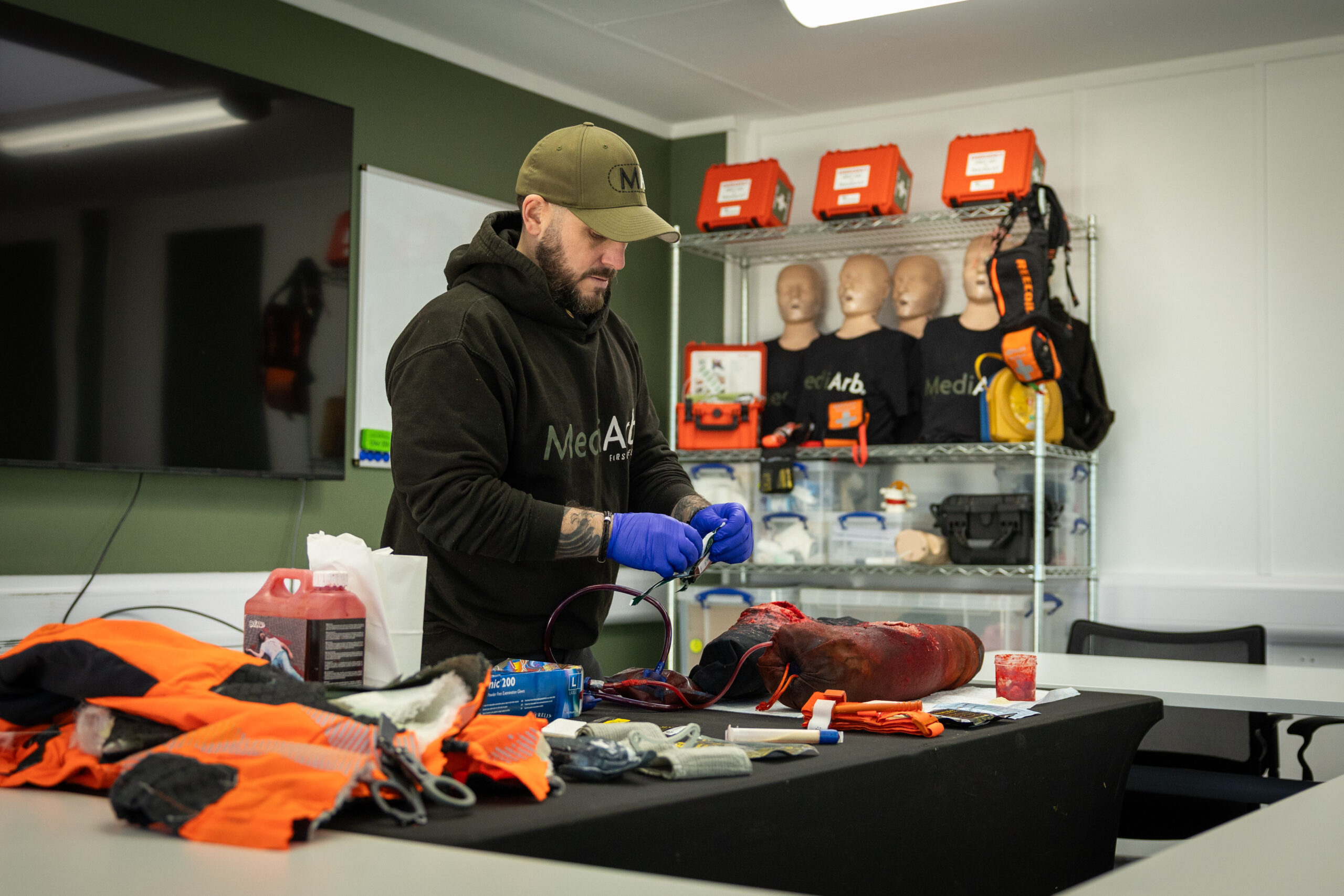
– Catastrophic Bleeding Control – use of Tourniquet and Haemostatic agents.
– Crush injuries.
– Shock.
– Responsibilities and reporting.
– Resuscitation Assessment of the situation.
– Emergency Planning and remote medical assistance.
– Dealing with an unresponsive casualty.
– Effects of extreme cold.
– Lyme disease.
– Minor injuries.
Duration: 1 Day (9:00am – 5:00pm)
Prerequisites: None Required
Capacity: Max 12 Delegates Per Course
Description
Course Overview:
The Level 3 Emergency First Aid at Work + Forestry qualification is designed to equip both first-time learners and those with existing first aid experience with the knowledge, skills and confidence required to respond to emergency first aid situations in forestry and agricultural environments.
The qualification is suitable for individuals with no previous first aid training, as well as those looking to build upon their existing First Aid at Work or Emergency First Aid at Work knowledge. It combines essential first aid principles with additional training tailored to the unique risks and challenges associated with forestry, agriculture and other outdoor working environments.
The course covers the essential topics outlined in the Forestry Commission First Aid Policy 2015, ensuring learners develop the practical skills and confidence to respond effectively to injuries and medical emergencies in remote, rural and woodland settings.
This course is ideal for individuals working in forestry, agriculture, arboriculture or other industries where first aid training needs to address both general and industry-specific medical emergencies, regardless of previous first aid experience.
Course Objectives:
- To provide a comprehensive understanding of emergency first aid procedures, with a focus on forestry and agricultural environments.
- To develop the necessary skills to respond effectively to a variety of injuries, from minor wounds to life-threatening conditions such as severe bleeding and crush injuries.
- To equip learners with the ability to implement forestry-specific first aid techniques, such as the use of tourniquets and haemostatic agents for catastrophic bleeding.
- To gain an understanding of how to respond to environmental factors, such as extreme cold, Lyme disease, and other conditions common in forestry settings.
- To prepare participants for remote medical assistance situations where emergency services may be far from the incident location.
Emergency First Aid:
- Responsibilities and Reporting: Understand the first aider’s responsibilities in terms of care, documentation, and reporting during emergencies.
- Resuscitation: Learn life-saving techniques such as CPR, including the use of Automated External Defibrillators (AEDs).
- Assessment of the Situation: Evaluate the scene of the emergency, ensuring it is safe to administer aid.
- Anatomy: Basic knowledge of human anatomy to assist with the understanding of first aid procedures.
- Dealing with an Unresponsive Casualty: Manage unresponsive casualties effectively, including techniques for placing them in the recovery position.
- Minor Injuries: Treatment of cuts, abrasions, sprains, and other minor injuries common in the workplace.
- Basic Hygiene in First Aid: Maintain hygiene standards to prevent infection while providing first aid.
- Bleeding Control: Techniques for controlling both minor and severe bleeding, including the use of bandages and dressings.
- Burns: How to treat burns and scalds safely and effectively.
- Choking: Responding to choking incidents, including techniques like the abdominal thrusts.
- Epilepsy: Recognising and responding to seizure activity and understanding how to manage a casualty during an epileptic seizure.
- Shock: Identifying and managing shock, ensuring the casualty is stabilised.
Forestry First Aid:
- Catastrophic Bleeding Control: Use of tourniquets and haemostatic agents to control severe and life-threatening bleeding in remote environments.
- Crush Injuries: How to treat and manage crush injuries, which are common in forestry and agricultural work.
- Shock: Identifying shock in its various forms and providing the appropriate treatment.
- Responsibilities and Reporting: Reaffirming the first aider’s responsibilities, particularly in remote or rural locations.
- Resuscitation and Assessment: Advanced resuscitation techniques and how to assess casualties in a forestry environment, where access to professional medical help may be delayed.
- Emergency Planning & Remote Medical Assistance: Planning for emergencies in isolated locations and coordinating with emergency services when necessary.
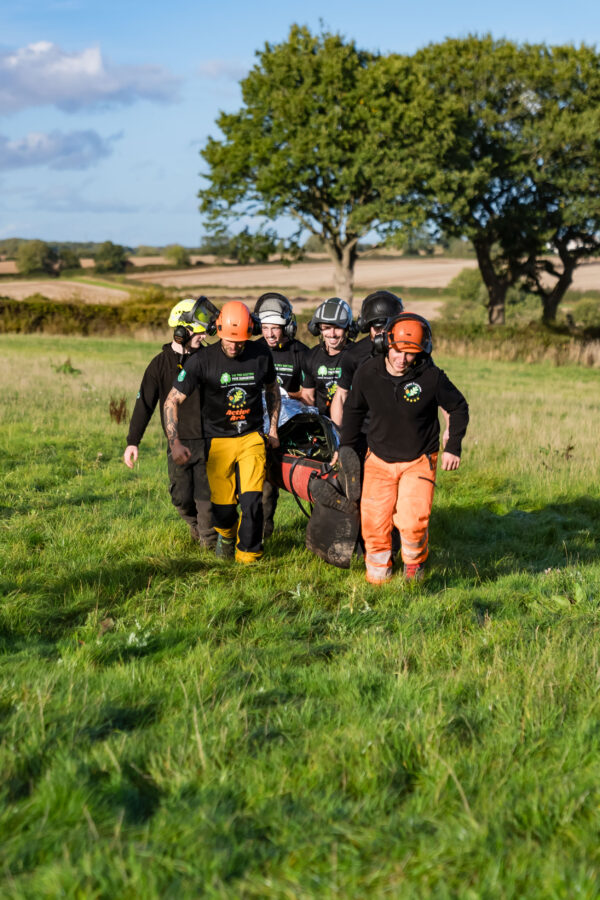
- Dealing with an Unresponsive Casualty: Practical skills for handling unconscious casualties in outdoor settings, including stabilisation and transport to safety.
- Effects of Extreme Cold: Recognising and treating hypothermia and frostbite, which are common risks in forestry work during colder months.
- Lyme Disease: Understanding Lyme disease, its symptoms, and how to treat it, particularly in areas where ticks are prevalent.
- Minor Injuries: Treatment of cuts, abrasions, and sprains that occur in forestry environments, where terrain and equipment present additional hazards.
Assessment: Participants will be assessed through both practical and theoretical components, ensuring they can effectively apply emergency first aid in both general and forestry-specific situations. The practical assessment will include casualty simulations, and the demonstration of skills learned during the course.
By the end of the course, participants will have the skills and confidence to provide emergency first aid in forestry and agricultural settings. They will be able to assess and treat casualties with a range of injuries and medical conditions, implement essential forestry first aid techniques, and manage emergencies in remote locations where access to medical assistance may be delayed. This qualification is crucial for those working in high-risk outdoor environments, such as forestry, agriculture, and land management.

Reviews
There are no reviews yet.